
Ethereum "Merge"

Ethereum, the crypto and blockchain technology network, has completed a software update called the “Merge”. While software updates are common, this one is a bit different as it was the world’s most ambitious and awaited software update in the blockchain world. The update increases energy efficiency, drastically, and paves the way for broad-based use of commercial blockchain.
Mining blocks in a blockchain is not an easy business. It requires crude computing power and consumes a lot of energy. This upgrade is expected to reduce Ethereum’s energy consumption by about 99%.
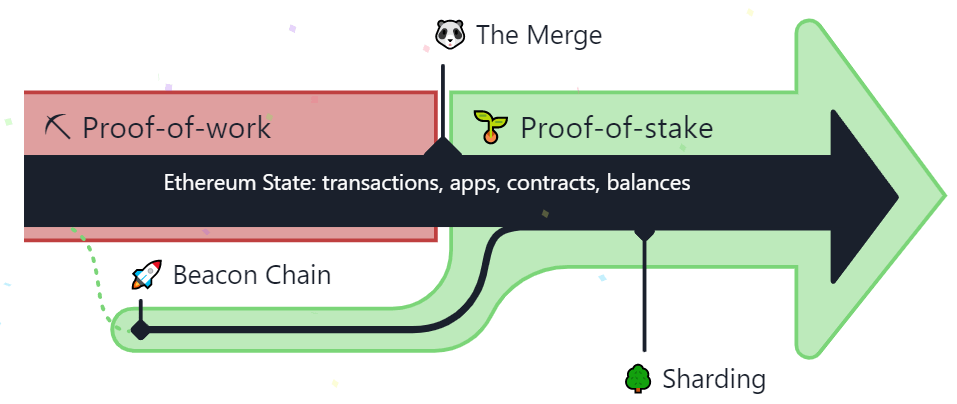
The “Merge” here refers to the upgrade from the original “proof-of-work” mechanism to “proof-of-stake”. It was executed on September 15, 2002. Initially, just like any other crypto blockchain network, Ethereum ran on the concept of “proof -of-work”. For some time now, it had been running a parallel system of “proof of stake” named “Beacon Chain”. The merge represents the merging of these two parallel systems, and finally and permanently replacing the “proof-of-work” by “proof-of-stake”.
The diagram below shows this concept of “Merge”.
Ethereum is not like Bitcoin or Ether, it is much more. Bitcoin and Ether are cryptocurrencies based on blockchain technology that let us use digital money without payment providers or banks or any other intermediaries. Ethereum is a programmable platform that allows for building and deploying decentralized applications on its network. It can be used to create cryptocurrencies, provide financial services, draft and execute legal agreements, contracts, music, games, and a host of other services.
Ethereum in numbers:
Number of projects created on Ethereum’s platform: 2970
Number of accounts or wallets: 71 million
Number of smart contracts: 50.5 million
Amount of money moved through the Ethereum network in 2021: $11.6 trillion
Amount of money earned by creators on Ethereum network in 2021: $3.5 billion